
Yeovil Town FC
Huish Park
Lufton Way
Yeovil
BA22 8YF
The Club
Yeovil Town trace their roots to 1895 and have played under their current name since 1946. Shortly after that, in 1948/49, they reached the fifth round of the FA Cup, losing 8-0 to Manchester Utd in a match played at the Maine Road ground of their city rivals. Long-time members of the Southern League, Yeovil Town became founder members of the new national fifth tier – then the Alliance Premier League – in 1979. There were ups and downs over the following decades, including stints in the Isthmian League, and several impressive FA Cup runs, but the turn of the century brought a surge of momentum.
In 2000/01 the Glovers finished second in the Conference, and a year later lifted the FA Trophy at Villa Park (with Wembley out of action) by beating Stevenage Borough. In 2002/03 they claimed the Conference title itself – as a chant popular among Glovers’ fans reminds us – earning a first promotion to the Football League. After just two seasons in League Two they went one better, finishing top and moving up to League One. The fairytale reached its peak in 2013, when Yeovil defeated Sheffield United and Brentford in the play-offs to reach the Championship – an extraordinary feat for a club of their size and history.
Reality soon bit: only eight wins in 46 games saw them finish bottom and drop back to League One, and another relegation the following season sent them to League Two. Four difficult years followed before, under Darren Way, a much-admired midfielder in the team’s glory days of the early 2000s, they slipped into the National League in 2019, despite only falling into the relegation places late in the campaign. Ownership turmoil then accelerated their decline, and by 2023/24 Yeovil were in the National League South, playing in the sixth tier for the first time since 1996/97.
A rebuilt squad responded superbly, topping the sixth tier to bounce straight back. Last season’s 18th-place finish in the National League was modest, but with new ownership and a recent managerial change, the Glovers look to be regaining stability after a turbulent few years.
Travel to Yeovil Town
Nailsworth to Yeovil is about 86 miles by road that will take around an hour and 50 minutes via the M5. More scenic cross-country routes will be shorter in distance but will take a little longer.
By Supporters Club Coach – this is by far the cheapest and easiest way to travel. For information about Away Travel, including precise details of pick-up locations – look here. For this match, the departure times are The New Lawn – 3.15 pm, Sainsbury’s Dudbridge – 3.30pm, Stonehouse Brunel Way – 3.45pm.
The prices for coach tickets to this match are as follows (Supporters’ Club members get a £3 discount): Adults £29, U-16 £17, U-11 £8
To book a seat with the supporter’s club discount, please call 0333 123 1889 on Monday, Thursday, or Friday at 11am to 2pm. Please try to book early.
By Car – The address for car travellers is Huish Park Stadium, Lufton Way, Yeovil, BA22 8YF. It is a journey of about 86 miles that should take around an hour and 50 minutes. There is a reasonable amount of parking near the ground – local industrial estates to the west of the ground are probably best. There is some street parking elsewhere and some parking adjacent to the ground (cost £3). The ground is about 2 miles west of Yeovil town centre.
By train – You can get to Yeovil Town (and back, in a day, from Stroud) by public transport, but it might euphemistically be described as an adventure. A 7.45pm kick-off considerably complicates things and would necessitate an overnight stay. Outbound, leaving Stroud at 2.34pm, you can arrive at Yeovil Pen Mill station exactly three hours later, changing at Swindon and Bath Spa. Yeovil Town FC recommend getting a taxi for the next stage of the journey, but prebooking with a local company is advised. Alternatively, walk to Yeovil town centre, 20 minutes from the station, with the path along a disused railway line probably a better walking option than the pavement by the main road. (There are also hourly buses on route 68, but they don’t connect with the trains and you risk missing your onward connection towards Huish Park.) Once in the town centre, locate the (decrepit and half-demolished) bus station. Get bus 51 (which should display Abbey Manor Park as its destination), which will take you within easy reach (a 5-to-10 minute walk) of the ground. The only one you could catch, and the final one of the day, is scheduled to leave the bus station at 6.15pm, although timetables on display may wrongly suggest otherwise. For Huish Park, Google Maps recommends alighting at the stop named Ford Park, although in practice that at Stourton Way (the first after an ASDA supermarket) may be more convenient. The bus stop names are neither obvious nor displayed on the buses or stops, so check your GPS on Google Maps or similar. Either way, you’ll have more than an hour before the game starts, but there are a couple of pubs among the housing estates near the ground. On Sunday, if you can get back to Yeovil Pen Mill station by fair means or foul, you’ll find the train service is very limited then. Leaving at 11.28am, you can be back in Stroud at 1.55pm (with one change at Swindon). The next departure of any use isn’t until 2.57pm; by changing at Bristol Temple Meads and Gloucester, you can be back in Stroud at 6.33pm. Phew! The cost of this West Country odyssey (or exploration into how much of England lacks high-quality, cheap, and integrated public transport)? A mere £53. Honestly the Supporters’ Coach is a much better option…..
The Ground
Huish Park has been the Glovers’ home since 1990, although it has been extensively redeveloped since, as the club went from strength to strength in the early part of this century. It now has a capacity of some 9,565, including 5,212 seats. Constructed on the site of a former army camp, its name recalls the club’s former town-centre ground, the Huish Athletic Ground, which location now hosts a Tesco supermarket and part of the town’s inner ring road. That ground was notorious for its slope, with plans to make the pitch flat discussed – ultimately abortively – for decades. Huish Park has a bit more character than many grounds of its age, with a spacious covered terrace for home fans at one end, and seated stands along both sides. An uncovered terrace at the north end is sometimes allocated to particularly large contingents of travelling fans, but we are more likely to be given the northernmost section of the east stand.
Ticket prices
Adults – £17
65+ and Military with forces ID Card – £15
Under-18 or Student with Student ID – £13
Tickets in the above three categories increase by £2 three hours before kick-off
Under-16 – £5
Under-14 (must be accompanied by an Over-18) – £3
The average attendance at Huish Park in 2024/25 was 2,977 – the seventh largest in the National League in that season.
Last Time At Huish Park
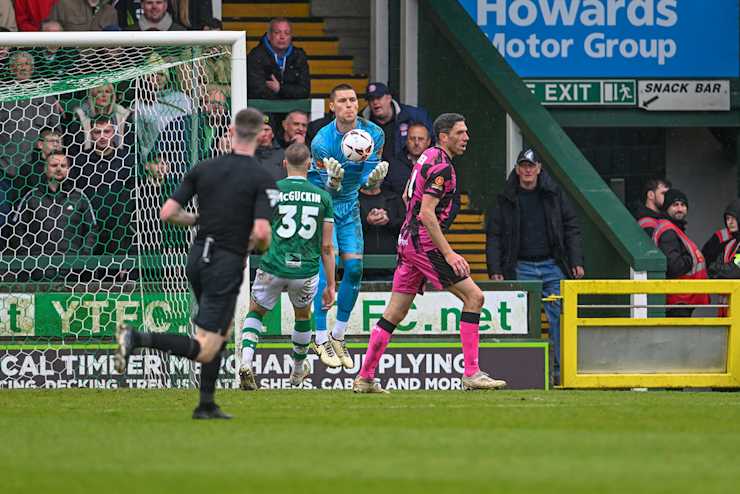
An Easter Monday clash at Huish Park towards the end of last season resulted in a 1-1 draw, with a late header from Ryan Inniss levelling the score.
How are they doing?
Adequately, one might say. In a round-about mid-table way: 22 games played, eight victories, three draws, 11 losses. Either relegation or the play-offs seem possible outcomes, the former marginally more probable than the latter. There has a fair bit of managerial turbulence this season.
Yeovil had a disappointing start to the season, which led in late August to Mark Cooper being relieved of the post of manager that he’d held since 2022, overseeing both a relegation and a promotion along the way. His hitherto first team coach, Stroud-born Richard Dryden, has enjoyed two spells this season as acting manager. Danny Webb was appointed as gaffer in September, but resigned for personal and family reasons after only one game, before returning to his former post of assistant manager at Chesterfield. In late November, Billy Rowley – who had been leading an impressive campaign at seventh-tier Walton & Hersham – became Yeovil’s new manager. Holding title-chasing Carlisle to a 1-1 draw in October is probably the team’s most impressive match result in the league so far this season.
The Gaffer

Billy Rowley had managed Walton and Hersham since May 2024, bringing them to a third place finish in the Southern League Premier South in 2024/25, and – by the time he left them last month – to top of that division as things stand, well ahead of second-placed Gloucester City even with a game in hand. Stepping up two tiers to manage Yeovil will offer Rowley the chance to prove himself, and also to show off and further develop the coaching skills he attained working in the academies of Chelsea, Fulham and Millwall.
Since Rowley took the helm, Yeovil have so far gone unbeaten – with a 2-1 victory at home over Boston Utd and a 2-0 defeat away of Hartlepool Town in the League being accompanied by an FA Trophy victory (decided by penalties) over Maidstone Utd. Can the Rovers break this new manager bounce?
The badge
Yeovil Town unveiled a redesigned club crest a couple of years ago, with the designer explaining the thinking behind it:
“The design, inspired by the glove-making heritage of Yeovil, brings to life the football club’s unique nickname – The Glovers. The typography displayed within the design is a nod to past typefaces, with the two colours – green and white – not only streamlining the identity, but enabling Yeovil Town to own these colours in English football, as one of the few clubs to play in them.”
To which some might quietly respond:
“Hmmm…”
The Town
Yeovil is 42 miles south of Bristol and 30 miles from Taunton. It’s in Somerset, close to the Dorset border.
As a former centre of Britain’s leather industry (especially glove-making), the town is partially post-industrial in character, although it also contains many pleasant suburbs.
More recently, the town is known as a centre of aircraft and defence industries. Westland Helicopters were synonymous with the town. Now under Italian ownership and renamed as Leonardo, it is still the town’s main employer. RNAS Yeovilton is just west of the town and BAE Systems also has a site nearby. The Westlands name lives on in the Westlands Entertainment Venue, which describes itself as “Somerset’s Premier Enterainment Centre” , including a cinema and conference venue.
DIY supplis wholesalers Screwfix started life in Yeovil in 1979 as the Woodscrew Supply Company in 1979. Although it is now a subsidiary of Kingfisher plc and has moved its main warehouse to Stoke-on-Trent, it remains a sponsor of one of the stands at Huish Park.
It is hard to find notable people from Yeovil or many unmissable sights in the town. Polly Jean (PJ) Harvey did study at the local Art College, and the first album of the act (when the name PJ Harvey was applied to the entire trio of performers) was recorded in the town. However, the folk band Show of Hands have a not entirely complementary song about the town, seemingly based on an experience of getting into a fight there one night.
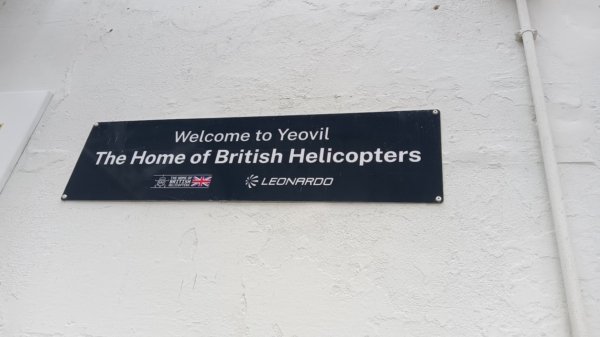
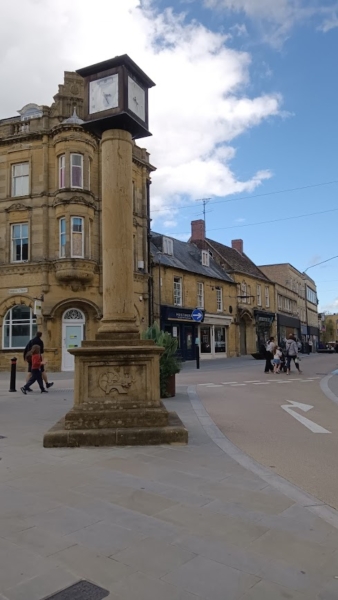
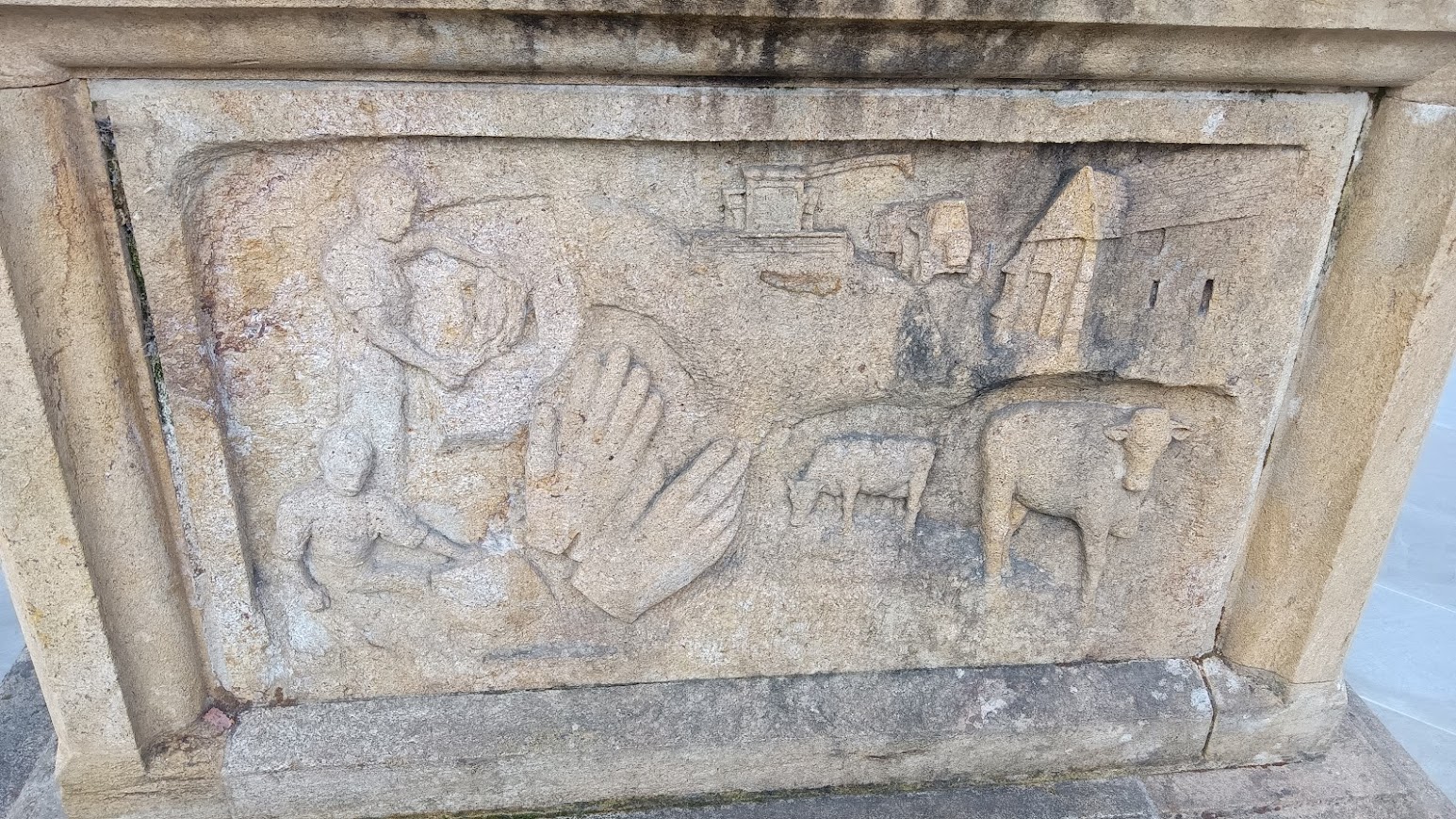
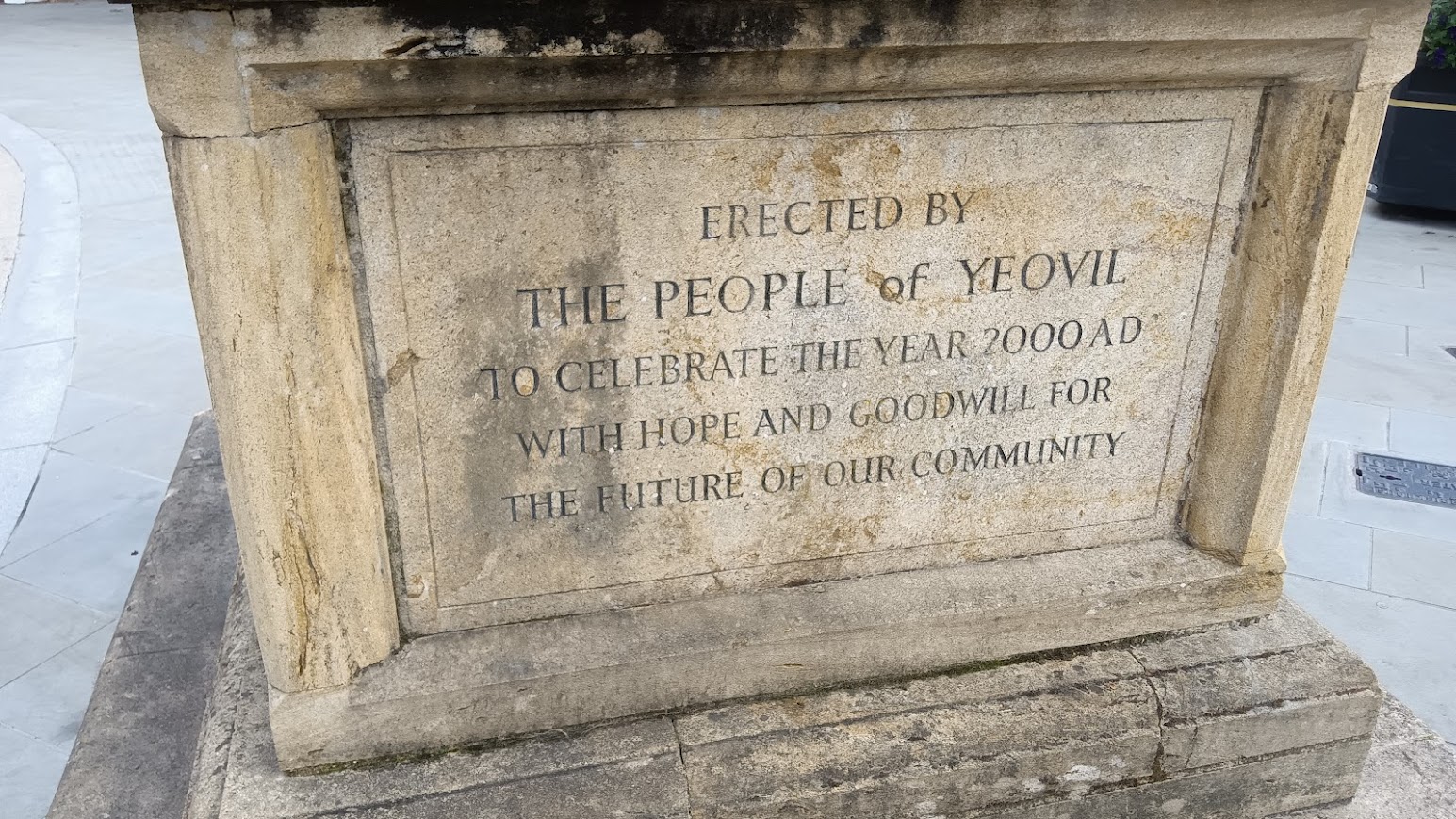
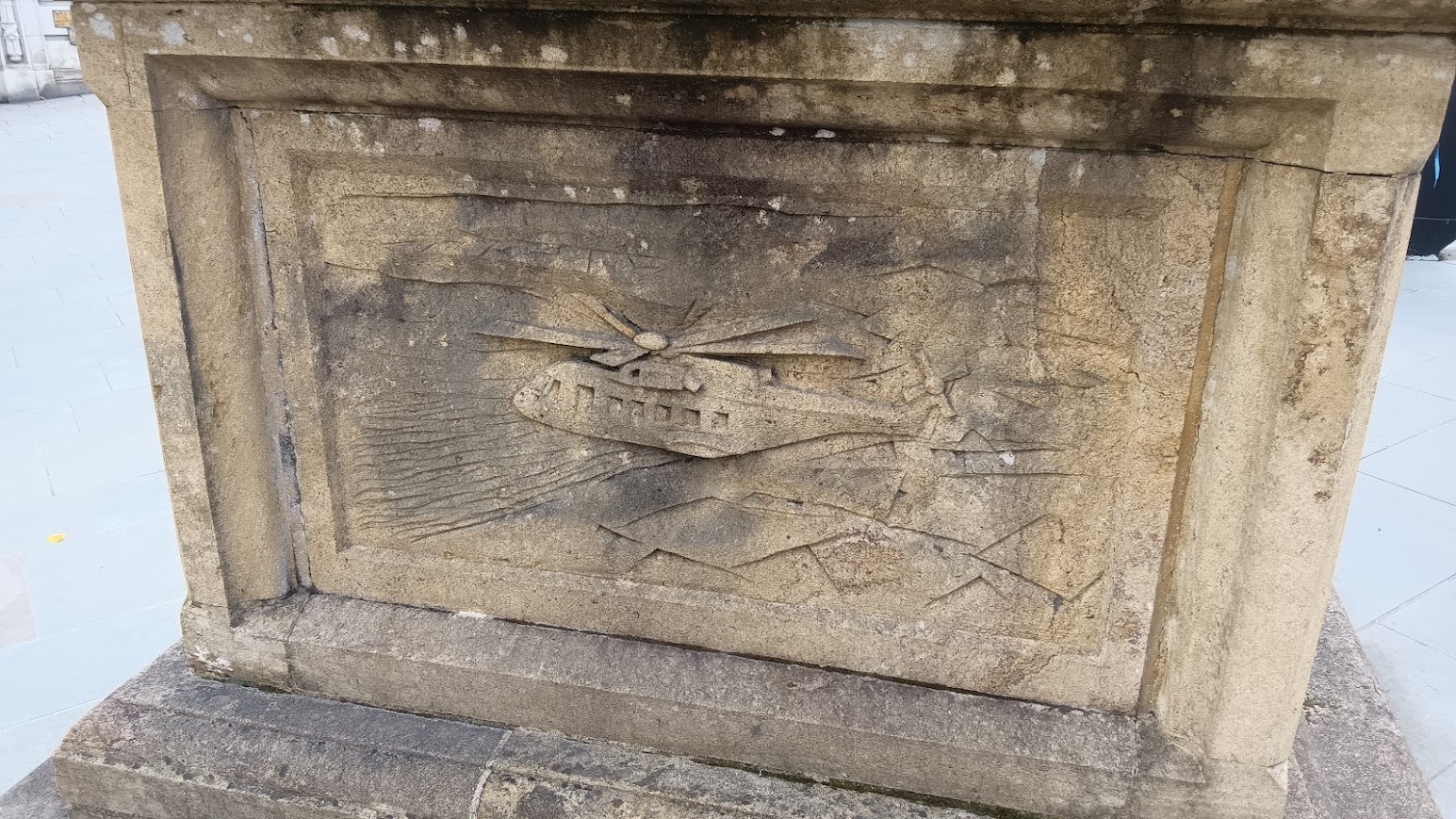
If you look carefully, images of both gloves and helicopters are to be found on the base of Yeovil’s Millennium Clock, one of the more distinctive features of a town centre that is currently undergoing extensive redevelopment.
