
The Club
York City FC,
York Community Stadium,
Kathryn Avenue,
Monks Cross Drive,
Huntingdon,
York
YO32 9AF
York City were founded in 1922 and spent seven years in non-league football before joining the Football League in 1929. For much of the next 75 years, the club bounced between the third and fourth tiers, with a brief but memorable spell in the second tier during the 1970s. Relegation to the fifth tier came in 2004, followed by a turbulent period of ups and downs.
They fought their way back into the EFL in 2012, only to fall again in 2016, and then dropped further into the National League North in 2017, where they remained for five seasons. Their return to the National League came in 2022, coinciding with a move from the characterful but crumbling Bootham Crescent to the LNER Community Stadium—a modern, Championship-standard ground on the city’s outskirts.
Nicknamed the Minstermen, in honour of York Minster, the club is 25% fan-owned via its Supporters’ Trust, while a controlling 51% stake is held by Canadian billionaires Matt and Julie-Anne Uggla, who serve as Co-Chairs. The Ugglas had previously attempted to purchase Yeovil Town, but that deal collapsed before they turned their focus to York.
The Ground
The York Community station was opened in 2021 with a capacity of 8,500. Constructed to Championship standards, it represents a big step up – at least in terms of facilities and comfort – over the characterful, but decaying, city-centre, ground at Bootham Crescent that York had called home since 1932. The new ground was built alongside two retail parks and a park and ride facility, a couple of miles outside the city centre. York City share the ground with York Rugby League FC, and it was used to host matches in the Women’s Rugby League World Cups in 2022 and 2025. There is a fan zone outside the south-eastern corner of the ground. Away fans are accommodated in a northern section of the West Stand, and sometimes in the North Stand, behind one of the goals. All areas have seats and are covered.
Ticket prices are as follows
Adults – £23
Concessions (Over-65) – £18
Students & 12-16 – £11
11 and under – £8
Please note: an £0.80p booking fee is applicable per ticket.
All tickets are subject to a £2 increase on the day of a match, applicable from midnight on a matchday.
Tickets can be purchased here.
The Gaffer
There were some expressions of surprise when York City parted ways with Adam Hinshelwood as manager in late August 2025. After all, by any measure his first full season at York had been a success in most regards – leading the team to a second place finish, and doing a great deal to seal the club’s image as one that was likely to return to the EFL before too long. And if the team’s start to the new 2025/26 season had not been astounding (with two draws accompanied by a win over newly promoted Truro City), York remained unbeaten when Hinshelwood departed. But there are always unseen reasons for managerial changes, all the more so when they come after a successful season.
The new gaffer is Stuart Maynard, most recently manager at Notts County, and before that at Wealdstone. At Notts, he’d guided the team into the League Two play-offs. As a player, he’d spent 12 years as a midfielder in an assortment of non-league clubs, with his most numerous appearances om the pitch being at Aylesbury Utd, Hitchin Town, and Enfield.
Upon his appointment at York, Maynard described the style of football he wanted his team to play as follows:
“Our main philosophy is that we play with the intensity that we want to.
That we’re aggressive at the top end of the pitch, we win the ball back as quick as we can because we want to dominate the ball, so it’s very key in the changeover that our counter press is very aggressive and we go and get the ball back.”
Travel to York City
York is Yorkshire’s most northerly city (about 30 miles north-east of Leeds). It is a journey of about 205 miles from Nailsworth, taking around four-and-a-quarter hours by road if all goes smoothly.
By Supporters Club Coach – this is by far the cheapest and easiest way to travel. For information about Away Travel, including precise details of pick-up locations – look here. For this match, the departure times are The New Lawn – 8.15am, Sainsbury’s Dudbridge – 8.30am, Stonehouse Brunel Way – 8.45am.
The prices for coach tickets to this match are as follows (Supporters’ Club members get a £3 discount): Adults £44, U-16 £25, U-11 £12
To book a seat with the supporter’s club discount, please call 0333 123 1889 on Monday, Thursday, or Friday at 11am to 2pm. Please try to book early.
By Car –
Ground Post Code – YO32 9AF
Travel to York by car will take around four hours (about 205 miles from Nailsworth).
Follow the M5 going north, then join the M42 and follow the A42 to join the northbound M1. At Junction 32 join the M18, before turning onto the A1 (M) at Junction 2. At Junction 4, turn off onto the A64 and follow it until you reach the Hopgrove Roundabout on the York by-pass. Here turn left along the A1237, before taking the first turning at another roundabout shortly afterwards (Malton Road/A1036). Turn right at a further roundabout by the Vangarde Shopping Park and the football ground will be signposted.
Car Parking
A dedicated area within the Monks Cross P&R site has 400 spaces for match day users. Tickets need to be purchased in advance from the club’s ticketing website. A steward then scans your ticket in the car park. Parking is not permitted in any other local car parks, so we highly recommend pre-booking an official parking space. Stewards will be present in the area on match days to advise.
The Vangarde Shopping Park, does offer parking however there are new restrictions in place. Click here for Vangarde rules.
Should you require a disabled parking spot, please contact the Ticket Office directly on 01904 950950.
By Train – it is just about theoretically possible to travel from Stroud to York and back by train in a day, although the long distance between York Station and the ground complicates matters, and requires a quick exit from the ground at the end of the match and a degree of luck in getting back to the station on time! Leaving Stroud at 7.58am or 8.59am, and changing trains at Gloucester and Birmingham New Street, it is possible to arrive at York station at 12,20pm or 1.32pm, respectively. The last train back from York with a connection to Stroud leaves at 5.42pm (with a change at Cheltenham Spa), although a train at 6.42pm will get you as far as Cheltenham Spa or Gloucester. If you choose to stay over in this charming historic city, in general, there are hourly connections to return on Sundays, generally just requiring a change at Cheltenham Spa, with the total journey time typically being a bit under four hours. The undiscounted return ticket price (valid for up to one month) is about £134, but this price can be substantially reduced (by up to one-half) by judicious purchase of advance and split tickets.
Travel between York station and the ground: Bus 9 runs approximately every 15 minutes, leaving York Railway Station (Stop RJ) and is scheduled to take around 22 minutes to reach the Monks Cross Park and Ride stop, which is almost adjacent to the ground. After the match, a bus is due to leave at 5.06pm and reach the railway station at 5.29pm: although the number 9 service continues at frequent intervals into the evening, this is the only bus that is scheduled to connect with the 5.42pm train mentioned above, and there is always the risk of traffic congestion.
What are they thinking?
(registration required)
How are they doing?
For the second consecutive season, really rather well. Striker Ollie Pearce has scored more goals than any other player in the league (26 as of 4 February), and after finishing second behind Barnet last year, it seems very probable that City will again qualify for the promotion play-offs – or potentially even reach the coveted automatic promotion that comes with taking the top place. A 5-0 defeat of fellow high-flyers Carlisle Utd in September is noteworthy, as is the 4-1 defeat of Rochdale in November; the only team consistently to have been in or close to the play-off places to have defeated York to date are Scunthorpe Utd, who attained a 3-1 victory over City in October.
Recent Clashes with Rovers
This season’s home encounter with York City, played in Nailsworth in September 2025, was an entertaining clash between two high-quality teams. It ended up as a 1-1 draw in which an early strike by Kairo Mitchell was soon cancelled out by the conversion of a York City penalty by Ollie Pearce. Rovers remained on top of the league table following the draw.

Rovers’ most recent visit to the York Community Stadium in March 2025 also ended up as a 1-1 draw, with York and FGR occupying the second and third places in the league table, respectively, both before and after the match. After City took the lead early in the second half, a goal from Harry Cardwell levelled the score, but no further goals followed from either side.
The Badge

The five lions on the club crest, which has been in use since 2003, derive (in a stylized form) from the coat of arms of the City of York Council and its predecessors. The Y shape obviously alludes to York itself, but also to the famous “Y-front” design of the team’s shirts that were worn for several seasons in the 1970s, as well as on special kits more recently.
The City
York is some 26 miles east of Leeds, and 90-odd miles south of Newcastle. It is now much smaller than these industrial cities (and others nearby such as Sheffield & Manchester). However, this North Yorkshire city has been one of the most important in the north of England since Roman times.
In 207 AD the Emperor Severus declared York as the capital of what the Romans called Britannica Inferior. It maintained its importance for over 1,000 years, through Saxon Kings, the Vikings, and the Normans. It was the centre of northern England’s ecclesiastical province. It declined in the Middle Ages, especially during the dissolution of the monasteries in the reign of Henry VIII .
By the 19th century, York had become famous for trains and chocolate.
Trains – The York and North Midland Railway (succeeded by North Eastern Railway) were headquartered in York and propelled the city into a major rail centre by the late 19th century. The National Railway Museum is in York (free entry, close to the mainline station). Even today the city is very well connected by train – York to London’s King’s Cross takes under 2 hours and there are 25 trains a day each weekday. Go north for 2 hours 25 minutes and you’ll be in Edinburgh.
Chocolate – the growth of the railways proved to be the incentive for the chocolatiers to sert themselves up in York. The most famous were Joseph Rowntree and Terry’s of York. The classics Kit-Kat and Chocolate Orange are both from here and Terry’s recently celebrated 250 years in the city.
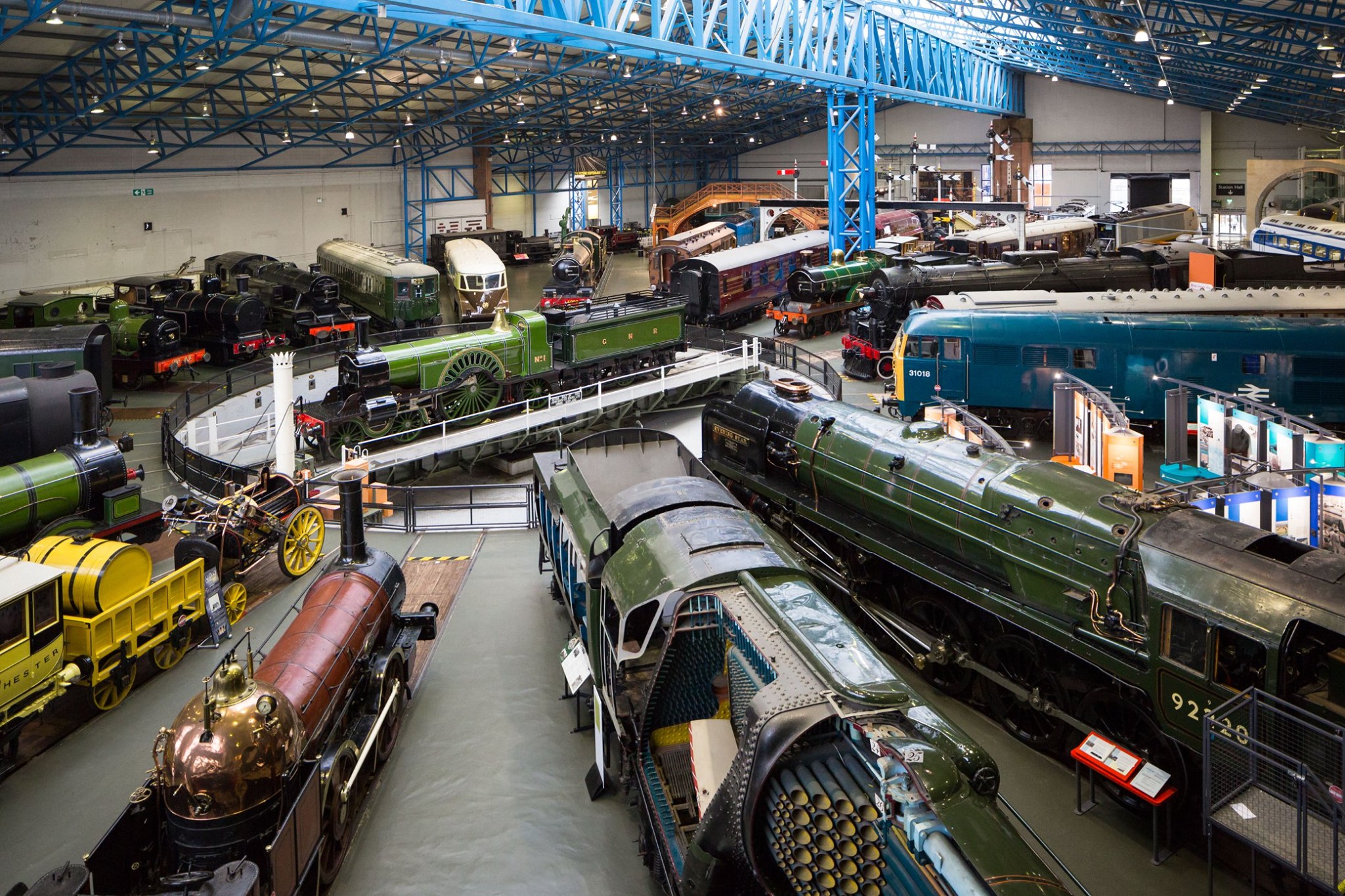
The National Railway Museum at York.
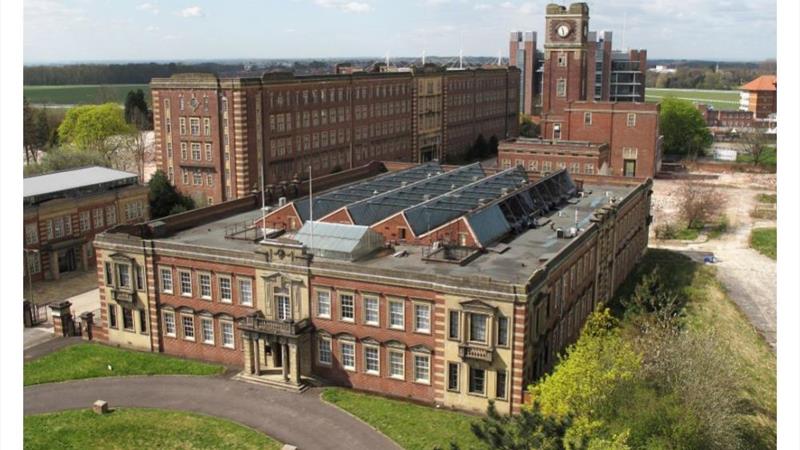
The former Terry’s factory at York (now residential) next to the city’s famous racecourse.

It would be hard to visit York and not take a look at its famous Minster and the surrounding medieval streets. This 900 year-old Gothic cathedral is one of England’s finest.
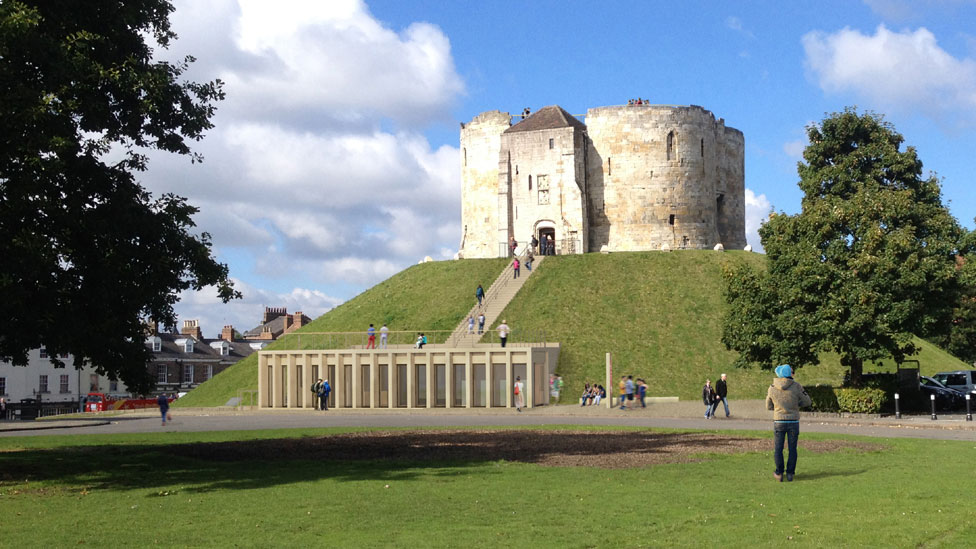
Another of York’s famous landmarks is Clifford’s Tower. Built by the Normans it is the largest remaining part of York Castle, when York itself was England’s northern capital. It is also the location of a notorious massacre of Jews in 1190, conducted or supported by many of the leading families of York.
